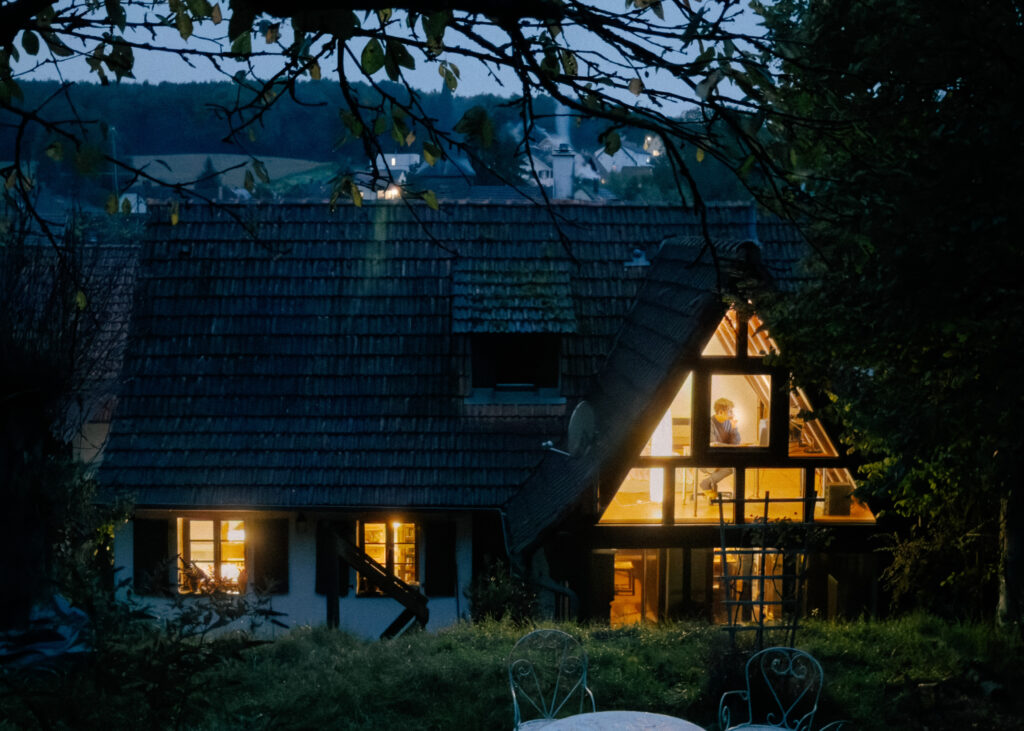
The house stands in an Alsatian village. Through thin walls and wooden floorboards, every sound passes: woodpeckers, air traffic, church bells down in the village, the hum in the electrical cabinet, wood pigeons on the TV antenna.
After both parents have died, the author returns to document what remains: listening to old family cassettes and recording the current inhabitants—wasps in the attic, cats at the shed, and deer in the garden.
Arranged alphabetically from Ausatmen (Exhaling) to Zyklus (Cycle), an acoustic farewell alphabet emerges: 21 sound miniatures of a house that will soon be emptied and sold. An autoethnographic inventory of a domestic ecosystem, told through field recordings, family archives, and spoken text—tracing a lifetime of listening in a place that hears everything.
(In German, “hellhörig” carries a double meaning: a building with thin walls where sound carries easily, and an attentive, vigilant way of listening.)
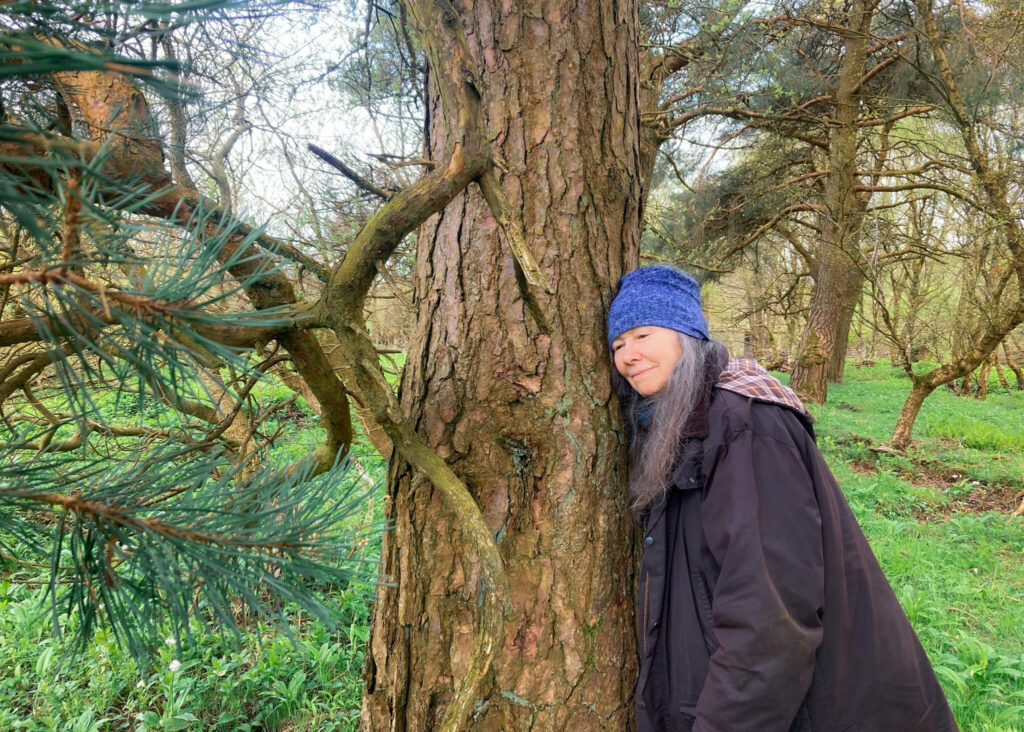
The radio documentary portrays the artist Josephine Dickinson in the North Pennines uplands of Cumbria. Deaf since childhood, she has developed a distinct way of listening that shapes both her life and her work. Everyday scenes—feeding animals, walking by the river, playing the carillon and the organ—are interwoven with her poems and reflections. The open form echoes her perception of her surroundings and her eventful life. The piece reflects on place and belonging, changes in the local ecology, and on listening beyond the ear.
50 min, SWR Kultur 2025
Main jury prize at the Berlin Radio Play Festival 2025 (Langes Brennende Mikrofon, Berliner Hörspielfestival)
“Best Acoustic Concept” at the Leipzig Hörspielsommer 2025
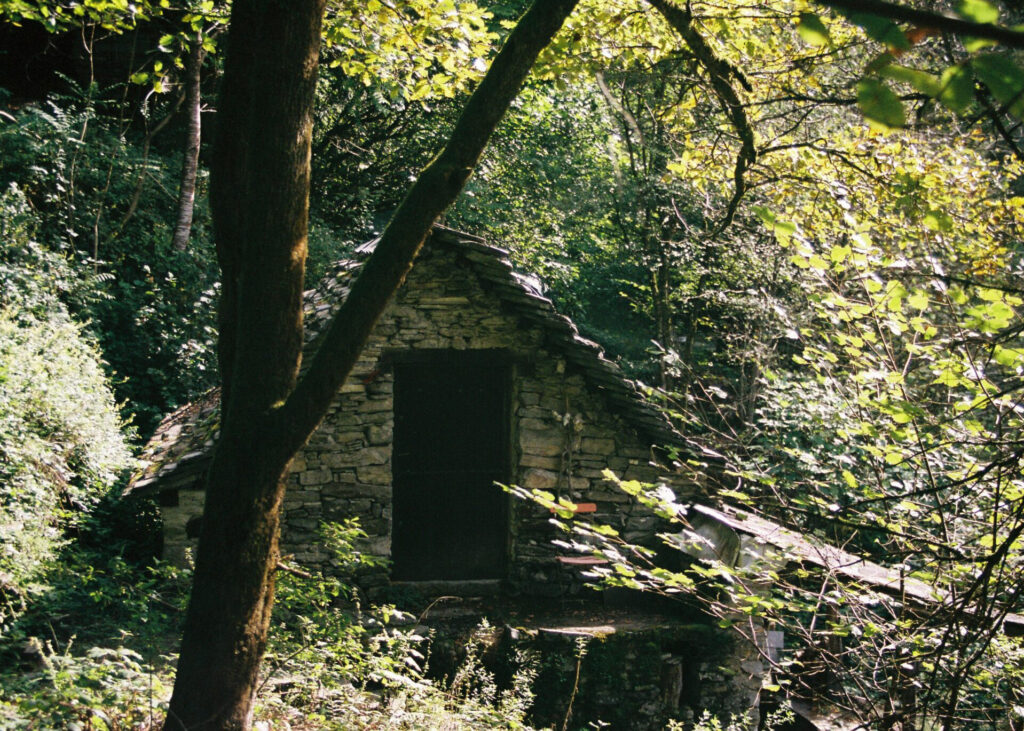
The project traces the life and work of Basalt (1910–?)—a geologist and queer figure from Berlin who fled the Nazis. They finally settled in a remote valley in Ticino (Switzerland) in the 1950s, where they formed deep ties with the stones, plants, and animals and developed early theories of acoustic ecology, preserved in aphoristic notes. The audiovisual project translates Basalt’s writings into a contemporary practice of listening in the Onsernone Valley—presented as a documentary field recording album and an audiovisual live performance.
In collaboration with Pablo Diserens
Released at Vertical Music and forms of minutiae (CD + Booklet)
Premiered at Eventi Letterari Monte Verità
2025
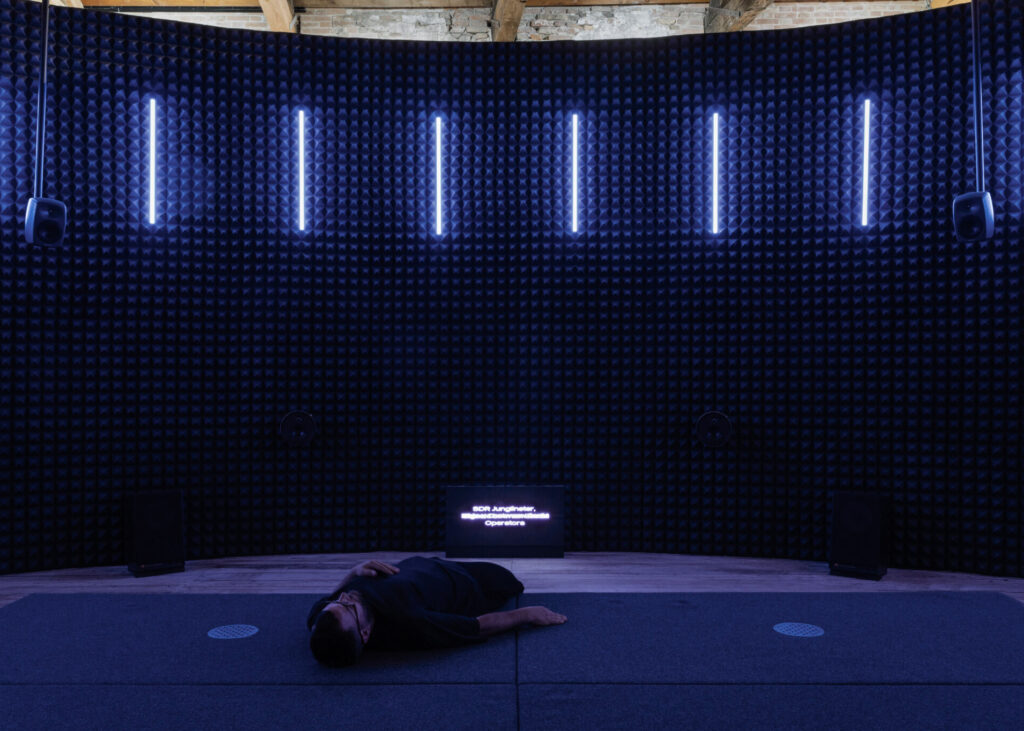
An audio piece commissioned for the Luxembourg Pavilion at the Venice Biennale of Architecture 2025.
“Ecotonalities: No Other Home Than The In-Between” weaves together field recordings from distinctive locations across Luxembourg, where sustainable and digital transformations are reshaping the landscape—energy production sites, data centers, satellite parks, and the forests, meadows, and artificial lakes surrounding them.
The piece is guided by the concept of the ecotone—a transitional zone between two ecosystems, interpreted in this work as the meeting points of human infrastructure and living environments, where forms of coexistence and friction arise. The recordings were made using a range of microphones, including vibrational, underwater, electromagnetic, and ultrasonic sensors, allowing for a multi-perspective perception of the environment.
Structured along the rhythm of a day and played back over 22 loudspeakers and 4 bass shakers mounted on the ceiling, walls and bench surfaces, the composition creates a dense, physical sound environment that can be experienced from multiple positions in the space—through stillness, movement, and proximity. To provide context, three subtitle screens indicate the sites and times of recording, species or machine models and the recording medium.
Presented as the central installation of the pavilion, the work forms part of the exhibition Sonic Investigations, which invites a shift of attention from the visual to the sonic in architecture.
Curators: Valentin Bansac, Mike Fritsch, Alice Loumeau, with Ludwig Berger and Peter Szendy
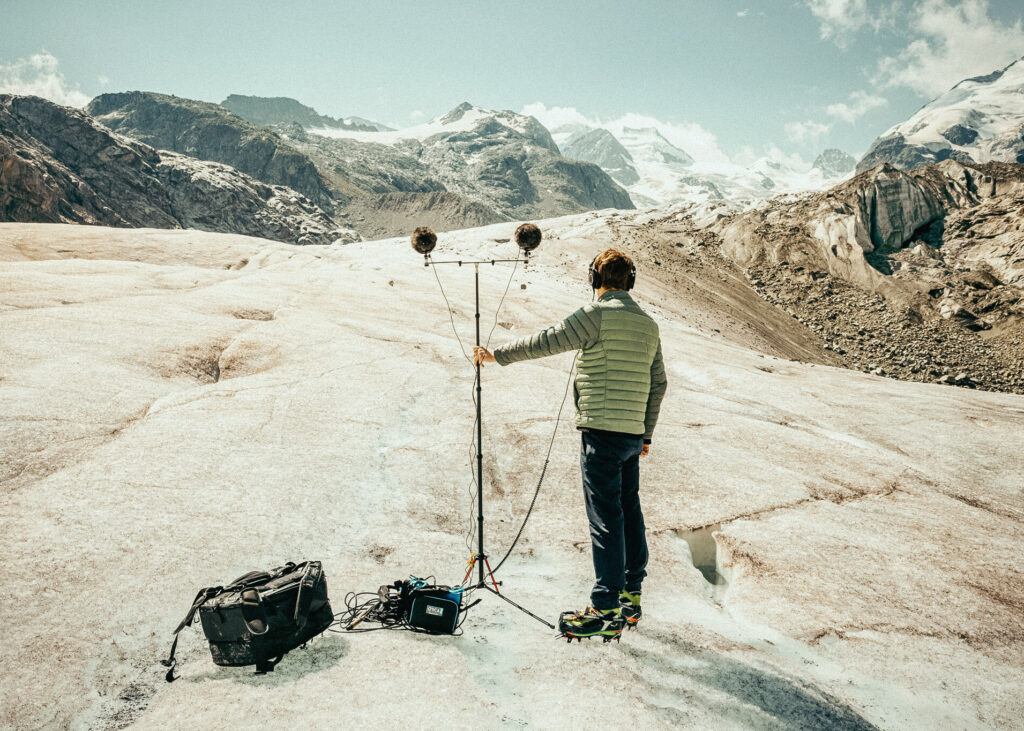
A personal sound portrait of the Morteratsch Glacier in the Swiss Alps. Recorded over more than ten years, Crying Glacier approaches the glacier as a presence with voice and agency — closely aligned with the notion of environmental personhood.
Developed in summer 2023, the project takes the form of both a documentary film and a vinyl LP. It traces a long-term relationship between listener and glacier. Using hydrophones, Ludwig Berger explores water-filled crevasses and melt channels, revealing a spectrum of sonic articulations: bubbling, cracking, rasping, humming. Voices emerge that seem animal, human, synthetic — forming a dense, layered glacial noise.
The composition shifts between extreme proximity and broader acoustic horizons, ending with a speculative soundscape of the valley after the glacier’s disappearance. Sounds from the project have been presented at UNESCO Paris, the UN Headquarters in New York, the World Heritage Committee and The New York Times Climate Forward 2025 (Climate Week NYC).
Documentary by Lutz Stautner, vinyl release at forms of minutiae 2025.
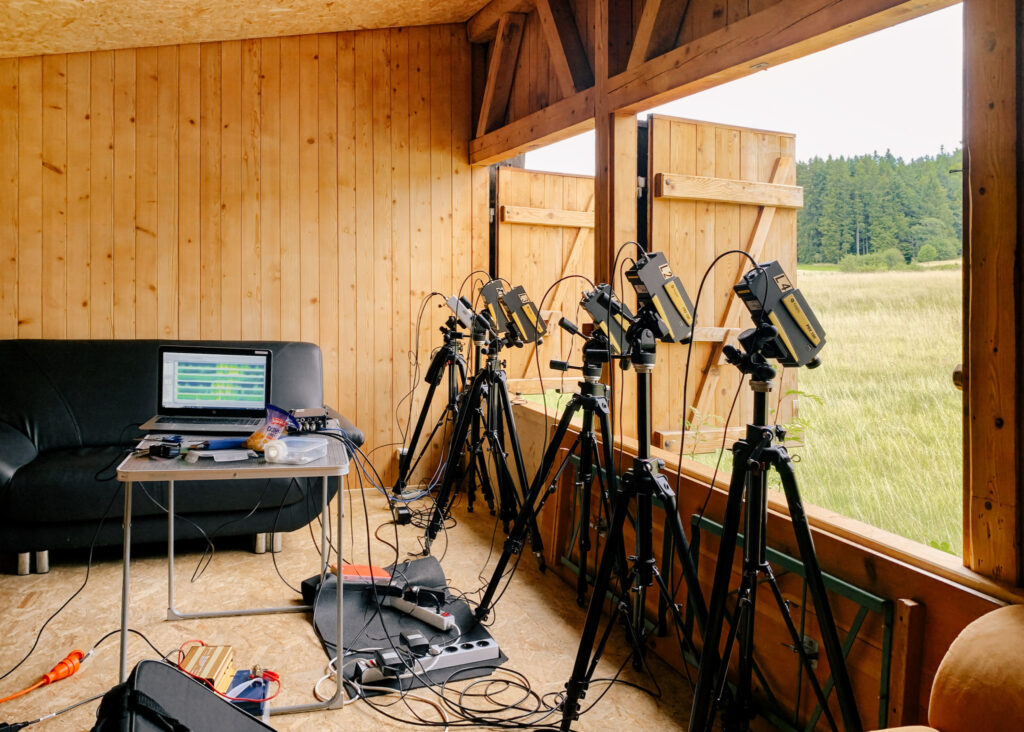
“Vibroscape of Hochmoor Gais” is a vibratory installation rendering perceptible the vibrational communication among insects in a meadow. Grounded in the emerging science of biotremology, the project investigates the unique “vibroscape” of the local ecosystem of a wet meadow in the Swiss Alps. Over several days, vibrational signals by insects were recorded with an array of six laser Doppler vibrometers. This recording material of 150 hours was then edited and distilled into a coherent composition.
In collaboration with Juan José López Díez
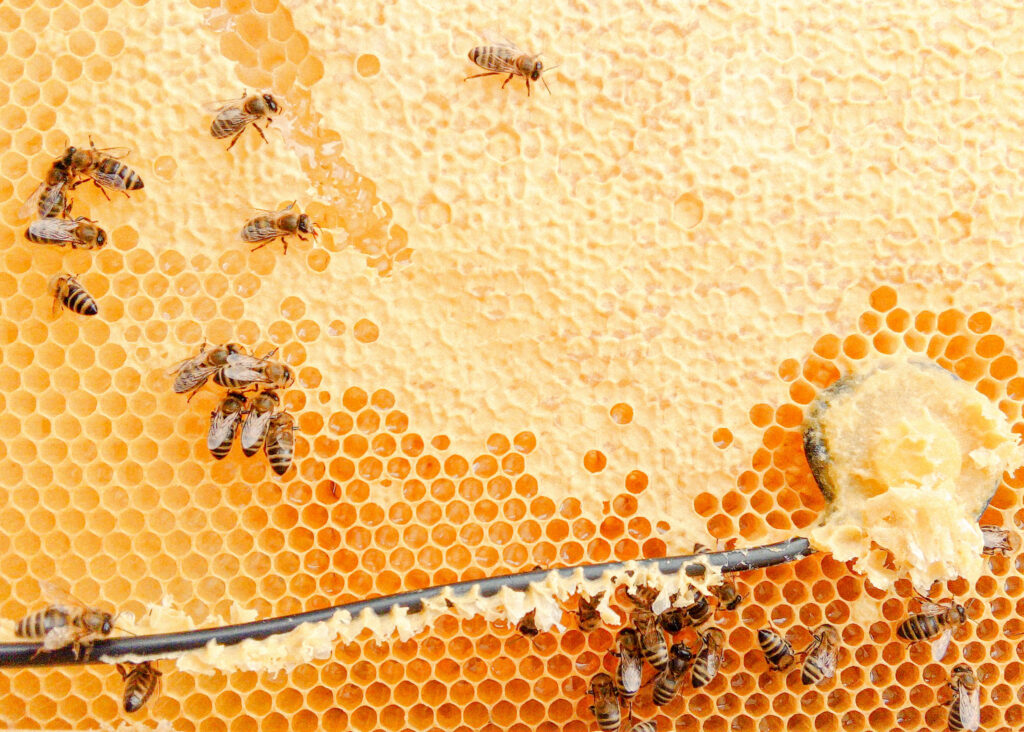
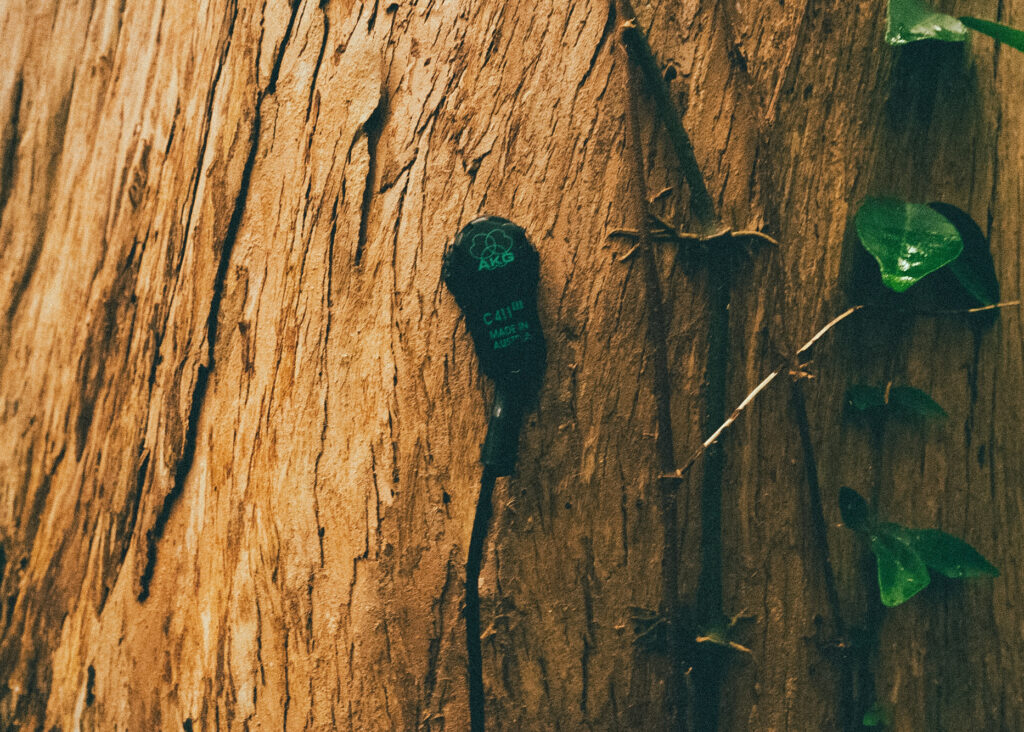
A beehive lives in the 1:8 model of a barn. Four contact microphones embedded into the combs register the vibrations of the super organism. The sounds inside the hive are transmitted in realtime into the barn’s interior. Twelve body shakers on the corresponding positions transmit the vibrations of the hive into the wooden walls, beams, ceiling and floor. The barn acts as an acoustic model of the hive in the scale of 8:1.
Realized at Klang Moor Schopfe 2019 in Gais, Switzerland.
Design and realization of the model: Anja Schelling, Yvo Corpateaux
Survey and consulation: Johannes Rebsamen (ScanVision)
Bee keeper: Heidi Ziegler, Gais
“You finally hear the bees inside a beehive call and respond – an opulent repertoire” (TAZ)
“The hut becomes a sounding body, the visitor feels like he’s in the middle of the beehive.” (Tagblatt)
“A crackling or patter can be heard, perhaps as if from a great fire. Not threatening, rather cosy.” (Blick)
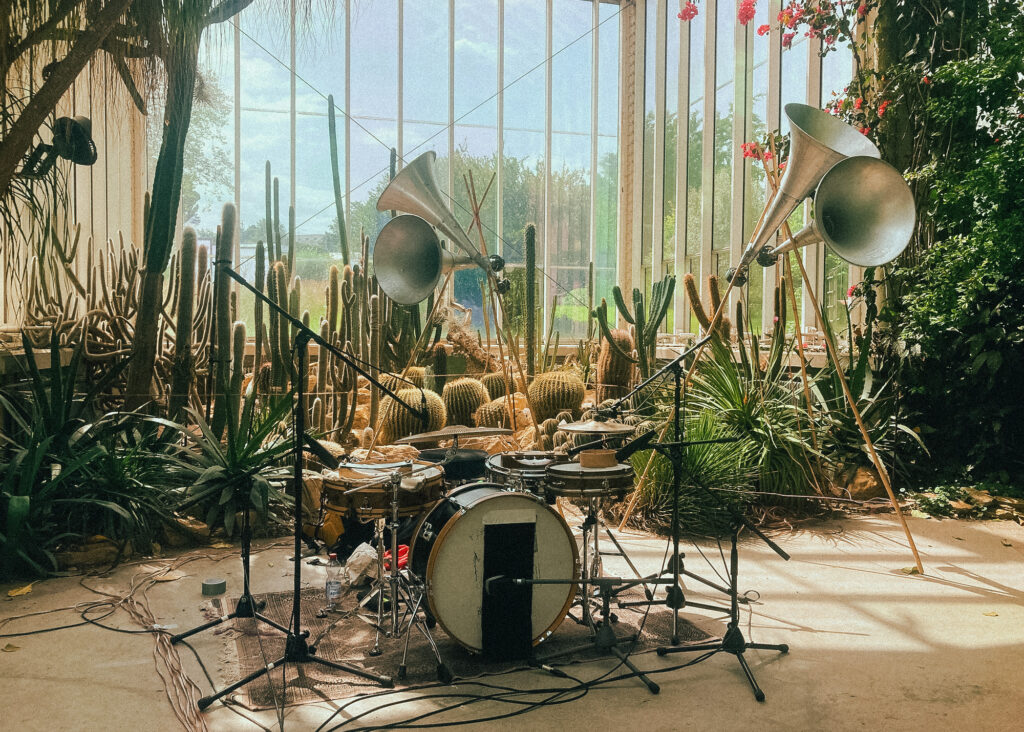
As a tribute to the endangered insect world, the project presents a loudspeaker orchestra with human and insect musicians in botanical gardens and other places.
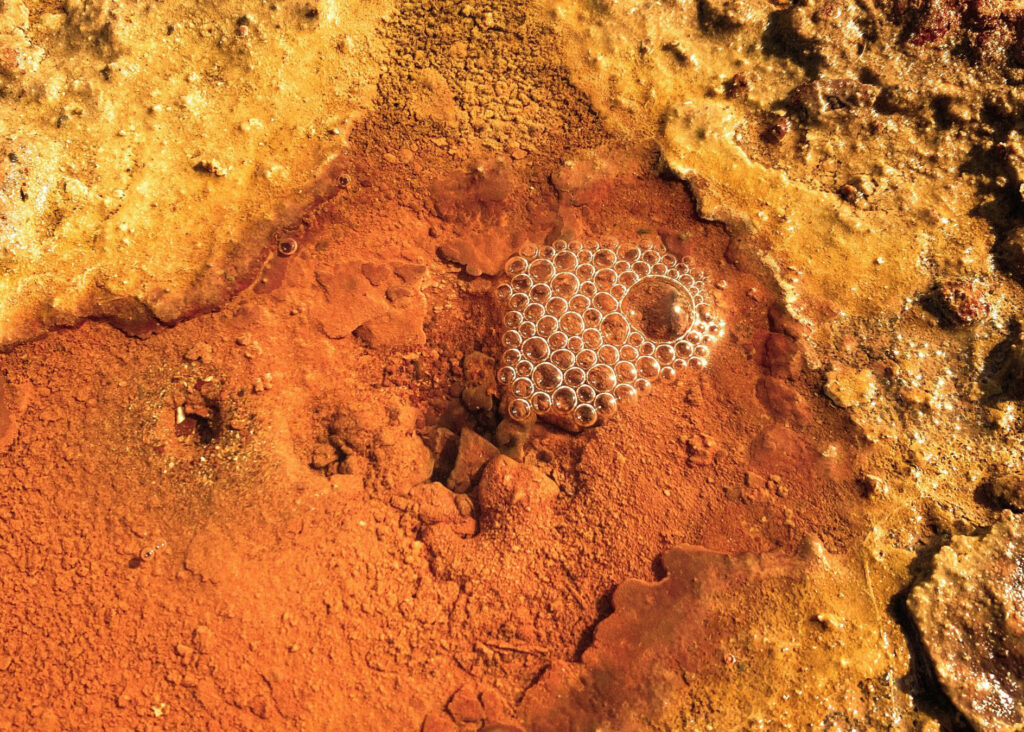
Field recordings of mud volcanoes near Mount Etna in Sicily. Each vent has its own unpredictable and unique voice, bubbling natural salty water, mud, gas and liquid hydrocarbons to the surface. They are not real volcanoes, but their activity is closely connected to Mount Etna. The site on the outskirts of the town of Paternò is characterized by both wonder and neglect, with geological vitality between discarded clothing, electronics and cartridge cases on the ground.
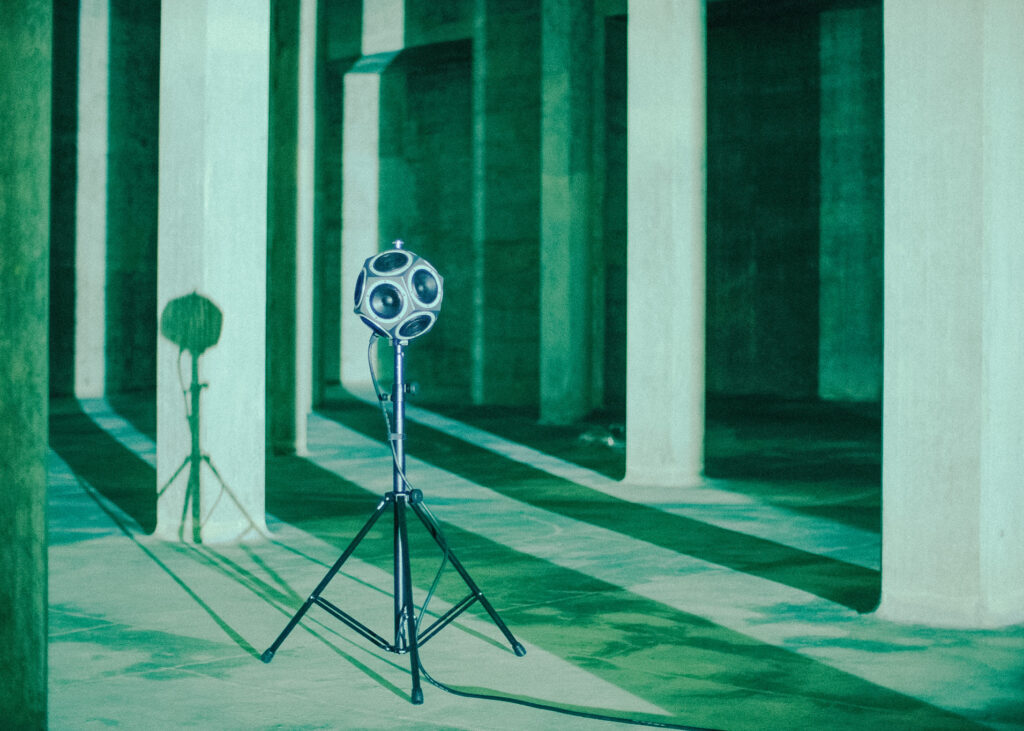
The trilogy traces the dramatic metamorphosis of alpine water in the Anthropocene. Ranging from the receding tongue of the Morteratsch glacier (“Melting Landscapes”) in Engadine to the guzzling turbines of the Punt Dal Gall hydroelectric dam (“Dammed Landscapes”) and the disgorging reservoir chambers of Zurich (“Buried Landscapes”), the collectively recorded field recordings combine to paint a panorama of a fading epoch when water was still treated as a naturally inexhaustible element
With Fabian Gutscher, Dennis Häusler, Johannes Rebsamen and Matthias Vollmer (Institute of Landscape Architecture C. Girot, ETH Zurich)